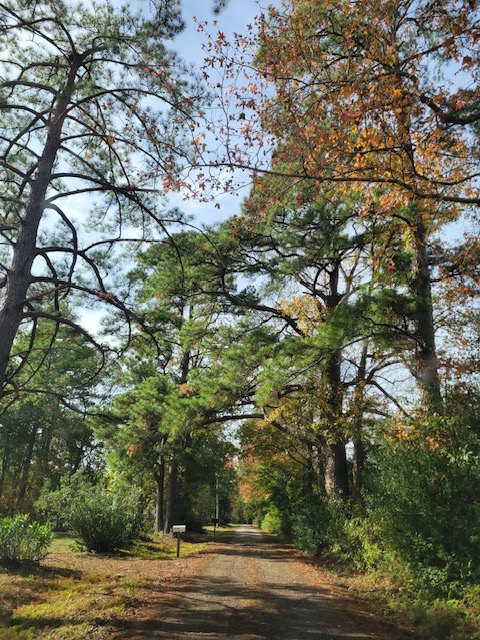

Just before the start of summer, on May 22nd, 2024, I had an adventure seeing an innovative Houston music ensemble, Loop38, play a newly commissioned piece, titled Longleaf. Ben Morris, who is a composer, jazz pianist, and an Assistant Professor of Composition from Stephen F. Austin State University, created the multimedia piece. When Longleaf‘s recording recently popped up in my social media feed, I realized it would be perfect to write about for this blog.
What is Longleaf about?
Basically, the show is about the longleaf pine species (pinus palustris), native to East Texas. The longleaf’s region once numbered 90 million acres in the broader southeastern United States, before its numbers dramatically decreased in the timber boom of the late nineteenth and early twentieth centuries, followed by fire suppression. The Nature Conservancy has worked to support the native tree’s conservation, and Shawn Benedict, a longleaf expert and Texas preserve manager from the Nature Conservancy, contributed knowledge to the production of Longleaf. Benedict was also a guest at the May 2024 performance.
In addition to the history, another show theme featured fire ecology, because the longleaf species depends on fire for greater growth (yes! —you read that right!)
How’d I hear about it? Why go?
In the past several months, I began following various conservation leaders and organizations on LinkedIn for inspiration and opportunities. On May 20th, just two days before the only Houston show took place, I saw a brief blurb about it in my feed, and I just knew I had to go.
I went because it seemed wild to me—if you pardon the pun—that in the same span of several months of my growing interest in conserving the Piney Woods northeast of Houston, Texas, someone else created an entire multimedia production devoted to a related East Texas pine species.
My actual experience:
Since I had only heard about Longleaf via LinkedIn (and it was a blink-and-you-miss-it post), and since the show was just the one night in Houston, I had no idea how many attendees to expect. The MATCH venue in Midtown ended up completely packed, and I’m thankful I arrived early.
In terms of my thoughts and emotions during and after the show, my immediate reaction was this: The whole production came together really well, seemed generally coherent, and at times felt deeply moving. There was a background video that played behind the musicians for the entire show, demonstrating what was happening to the longleaf forests over time. Sometimes the video included human conversation, nature sounds, and even archival footage of sawmills and loggers while the Loop38 musicians played.
Loop38 comprised a talented music ensemble, which Craig Hauschildt conducted, and I enjoyed watching all the musicians. At times it seemed some of them were required at times to improvise and respond to some of the recorded bird calls and other nature sounds; I remember that some musically-trained audience members commented on this phenomenon in particular during the live Q & A afterwards.
For me, the nature sounds and visuals, including the trilling of an Eastern screech owl (megascops asio) (in the ending “Dawn Chorus” segment), the buzzing hum of cicadas, and a clip of an endangered red-cockaded woodpecker (picoides borealis), were marvelous to witness at the start and end of Longleaf.
However, the historical sawmill segment (especially prominent in the “Rocket Stage” or second of Longleaf’s three musical movements), was truly hard for me to watch. With Morris incorporating real historical footage, there was one clip in particular that showed a massive tree tilt ominously, and then fall. I felt similarly ill at ease seeing the hundreds of logs stacked on truck beds in another fleeting clip. I remembered thinking, with a weight in my chest, that it takes so many years for one tree to grow—but it takes no time at all for a person to chop it down. Morris didn’t shy away from showing clips of forests turned to pastures, and later, oil refineries, in the aptly-named segments “IX: The Terrible, Empty Sky” and “X: Old Field.”
The most surprising–and satisfying–experience
Witnessing the power of prescribed fires that bring out the richest growth, especially near the end of the show, was my favorite part.
Initially, Morris used several retro Smokey the Bear ads in the video to highlight the ignorance, and irony, of protecting forests from fire—when the longleaf species, it turns out, depends on fire to grow.
The video next showed a recording of a prescribed burn in three mini-acts. This documentation allowed the audience to see a longleaf thicket before the burn, during, and after. First the video showed modest vegetation beneath the longleaf pines, then the camera featured the fire crew lighting the thicket. It became scorched black. Soon, however, the thicket grew back, more lush than before. The “Dawn Chorus” segment then had the camera looking up at a starry night sky, the black outlines of trees lacing the edge of the screen; nighttime nature sounds played as musicians sought to echo owl hoots with their own instruments, and the combination felt gloriously serene.
Final takeaways
As a person of faith and former English major, another reason I find fire ecology so inspiring is that its science also works on the metaphorical level for the soul/self. The dying self, or the self going through fiery circumstances, can nevertheless experience tremendous new growth in spite of everything against them.
May the longleaf pines make a tremendous, lasting comeback!
Many thanks to Ben Morris, Loop38, and The Nature Conservancy for bringing this fantastic show to life!
Curious to learn more about Longleaf? Here is Morris’s own blog post on creating the show!
 Saving the Houston Piney Woods
Leave a comment