On the night of Saturday, Oct. 5, 2024, I was scrolling on Instagram, and saw an interesting Houston Botanic Garden event advertised for the very next day. I made the instant decision to go (and luckily my afternoon was free). Even though the topic wasn’t easy, I’m so grateful I went.
What was the event?
It was a presentation on Houston’s air pollution— and the connected, communal cost of the city’s lack of zoning.
Houston Botanic Garden hosted the event. A Houston Health Department chemist named Naiyah McDaniel gave the presentation, which was titled, “Understanding the Air You Breathe.”
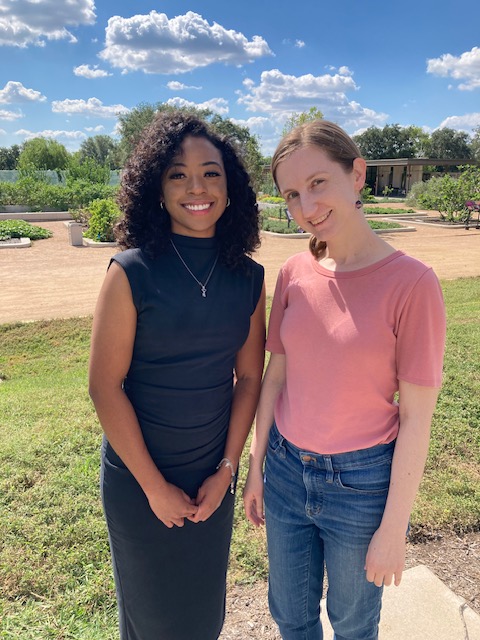
Chemist Naiyah McDaniel and Marilyn Leider. Photo credit: Justin Lacey
McDaniel presented information including:
- Historic environmental disasters in the United States
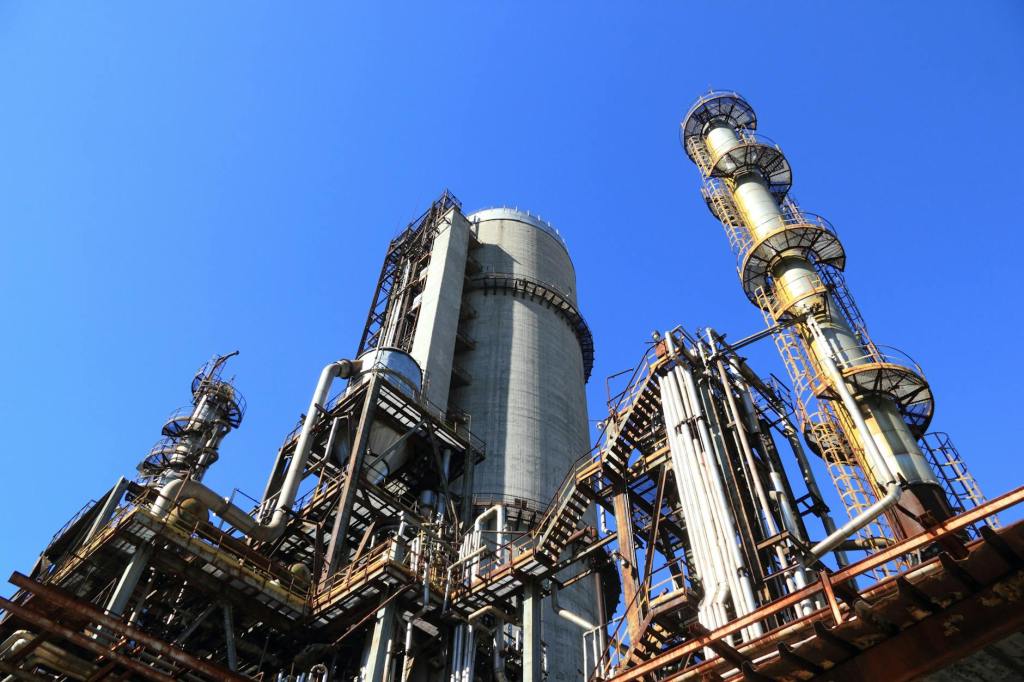
- Environmental disasters in Texas (such as BP’s oil refinery explosion in 2005 and the Port Neches chemical plant explosion in 2019)
- Landmark government action in the twentieth century to pass regulatory legislation (such as the Clean Air Act in 1963) and the creation of the EPA in 1970
- Several examples showing that regulations don’t always prevent disasters (such as the Deer Park Pipeline fire in mid-September 2024)
- Recent examples of work that the City Health Department is doing (in collaboration with other Texas agencies like Texas Commission on Environmental Quality (TCEQ) to monitor Houston’s air and collect data
Fenceline Communities
But then McDaniel began to talk about Houston’s lack of zoning laws. For those who may not know, Houston is the largest city of its size in the United States that does not have zoning— I’ve always heard this in the context of discussions about class and money: In Houston, people say the slums are literally across the street from the mansions, and if someone drives in almost any direction and they’ll find it to be true.
But this was the first time, in all my eleven years of living in Houston, that I’d ever heard this fact mentioned in an environmental context. For the first time, I learned that no zoning allows petrochemical plants to be next door to homes, schools, libraries, houses of worship, and yes, even botanic gardens. (My neighborhood in Houston may not be as close to a chemical plant as some Houston communities are, but the Botanic Garden, which I love, is just downstream from two facilities). That’s the meaning of “fenceline” – when a community is so close to a polluting facility that it’s also directly affected by that facility’s emissions.
According to McDaniel, recent studies show that certain chemical emissions from some of these plants have led to a rise in rates of:
- cancer
- reproductive harm
- headaches
- and respiratory stress in local residents.
Too Close to Home
Houston Botanic Garden has an outdoor parking lot. When I arrived that afternoon and opened the door to exit my car, something new happened that shocked me. Something I’ve never experienced in the past four years of occasional visits to the Garden, and the timing was unreal.
For the first time ever, I could smell what seemed to be burned chemicals in the air. It was a strong, sharp smell. Although I didn’t notice it much during the lecture (probably because the talk was so engaging), my lungs hurt for two more hours after I got home. All I could think was—how can children play outside in this scorched air, even as the weather cools off in the fall? How can residents do every-day outside things, like ride bikes home or walk to their houses of worship?
Let’s Clear the Air
McDaniel’s presentation didn’t end on a note of despair. Her final slides featured education and action initiatives to expand community knowledge.
The list of initiatives encouraged attendees, and all Houstonians, to learn as much as possible about environmental policies and how emissions impact human health.
Most of all the initiative that got my attention featured trees (is anyone here surprised?) In November 2023, Apache and Houston Wilderness collaborated on a “super tree” planting at Chavez High School in Houston’s East End, not too far from Houston Botanic Garden. Participants planted more than 400 trees. According to Rice researchers, these 14 “super trees” top the rankings of tree species in their abilities to absorb pollutants, improve urban climates, and mitigate flooding.
At the very end, there was a few minutes for questions and answers, but it quickly turned into a brainstorming session where several attendees offered ideas for community engagement. Some of these ideas included including Spanish-language opportunities (since many impacted residents are native Spanish-speakers), and potential partnerships with libraries and schools. Justin Lacey, who is the Garden’s Director of Communications & Community Engagement, also chimed in with thoughts, as did McDaniel.
Ultimately, although the data on Houston’s air pollution and petrochemical emissions was alarming, I’m so thankful I was able to learn about it. Not only am I more informed now, but I’m also inspired to share the history and data with others. Together, we can plan and take important action to help our communities.
 Saving the Houston Piney Woods
Leave a comment